Dear Mama,
When you first notice those small, red patches on your baby's delicate skin, it's natural to feel a pang of worry. Perhaps you've wondered if it's something you did, or if you're somehow to blame. I've been there, and I want to tell you the most important thing I learned: eczema is not your fault. It's not a reflection of your care, nor is it caused by poor hygiene or anything you've fed your little one. Eczema is a common skin condition where your baby's skin barrier is naturally weaker, leading to faster moisture loss and easier irritation.
Understanding What Causes Baby Eczema
Research shows that eczema often runs in families. If you or your partner have a history of eczema, sensitive skin, asthma, or allergies, your baby has a higher chance of developing it too. It's largely genetic, meaning it's not something you could have prevented.
However, genetics alone don't guarantee eczema. The real challenge lies in identifying and managing triggers – factors that irritate already sensitive skin and can lead to flare-ups. Common triggers include dry skin (especially in colder or drier seasons), certain fabrics, heat and sweating, harsh soaps and detergents, and sometimes food or environmental allergies.
Remember, these triggers don't cause
eczema; they simply worsen an existing condition. Your baby either has the
predisposition or doesn't. By understanding and managing these triggers, you
can prevent painful flare-ups and keep your baby comfortable.
How to Spot Eczema: What to Look For
It can be hard to tell if what you're seeing is just normal baby skin or something more. Here’s what to watch for:
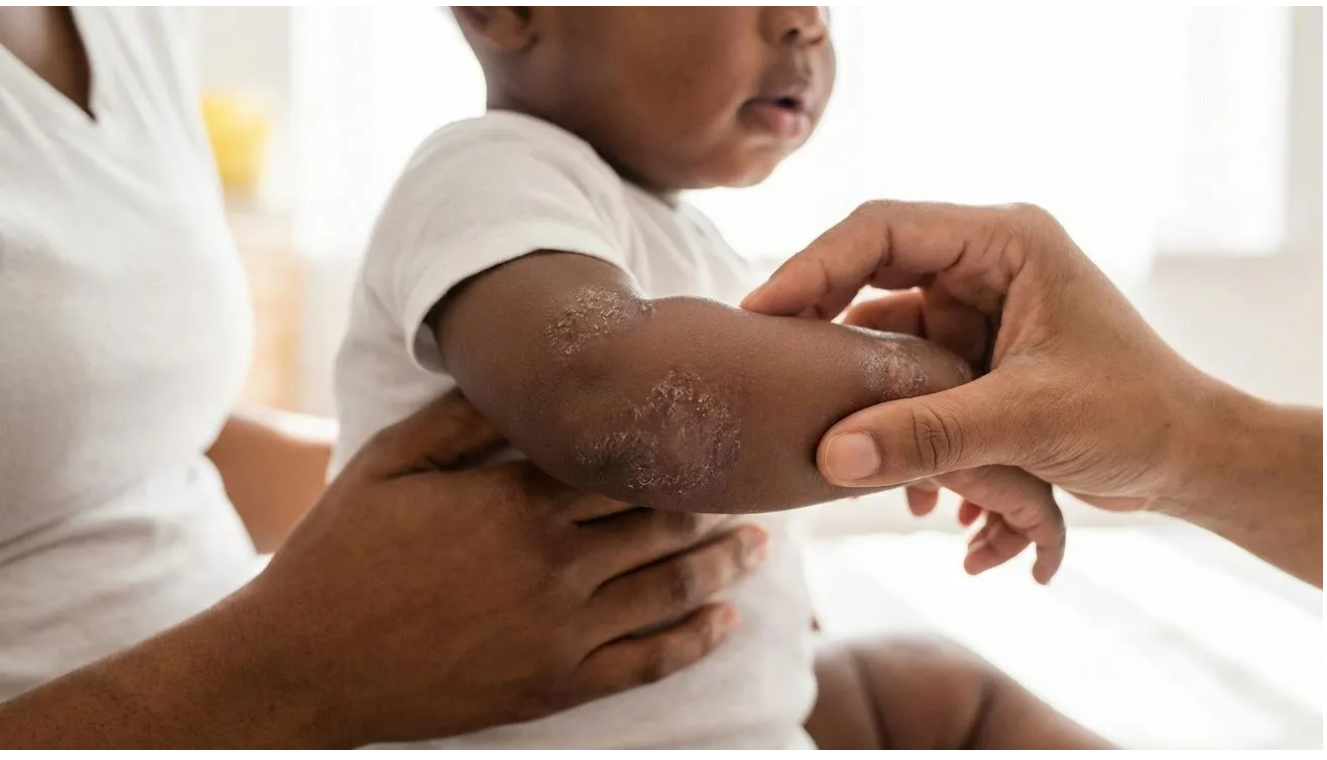
Eczema typically appears as dry, red, itchy patches. These patches might feel rough, almost like sandpaper. It's important to note that on darker skin tones, eczema might look gray, purple, or brown rather than bright red, which can sometimes make it harder to spot initially.
During severe flare-ups, the skin can develop small bumps, weep fluid, or even crack and bleed. The itching can be intense, and you might notice your baby rubbing or scratching the affected areas, which can unfortunately make things worse.
Common areas for eczema include the face, hands, feet, and skin folds (like the neck, elbows, and behind the ears). If you observe these signs, it's always a good idea to mention it to your pediatrician or nurse. They can confirm the diagnosis and rule out other skin conditions.
The Fabric Factor: Why What Your Baby Wears Matters
This was a big learning curve for me. I used to buy inexpensive synthetic clothes, not realizing they were making my daughter's eczema significantly worse. Here's why:
Synthetic fabrics like polyester and nylon trap heat and
moisture against the skin. When your baby sweats (and babies do sweat a lot!),
this moisture gets trapped. Combined with chemical additives used in
manufacturing, these fabrics create a perfect storm for eczema flare-ups.
Fabrics to avoid:
•
Polyester and polyester blends
•
Nylon
•
Synthetic wool or acrylic
•
Anything with rough textures or loose weaves
Fabrics that can help:
•
100% organic cotton: This
material breathes well, absorbs moisture, and is free from harsh chemical
treatments.
•
Bamboo fabric: Naturally
antimicrobial and moisture-wicking.
•
Silk: Smooth and gentle on
the skin, though often more expensive.
Switching to pure cotton made a noticeable difference for
my daughter within days. The constant scratching decreased, and the angry red
patches began to calm. My advice: invest in a few good quality cotton basics
rather than many synthetic pieces. Always check the label – if it says
"cotton blend," it might contain polyester that could exacerbate the
issue.
Practical Steps: Managing and Treating Baby Eczema
While there's no cure for eczema, there's a lot you can do to manage it and provide relief for your baby. Here's a more detailed look at how to tackle those flare-ups and keep your baby's skin as comfortable as possible:
1
Moisturize daily, and generously:
This is perhaps the most crucial step in managing eczema. Apply a thick,
emollient-rich moisturizer (creams and ointments are generally more effective
than lotions) at least twice a day, and especially within three minutes of
bathing. This "trap and treat" method helps to lock in moisture while
the skin is still slightly damp. Look for products labeled
"fragrance-free," "hypoallergenic," and "for sensitive
skin." Consider keeping a small container of moisturizer handy for quick
applications throughout the day, especially after diaper changes or messy play.
2
Keep baths short and lukewarm:
Long, hot baths can strip away natural oils from the skin, worsening dryness.
Aim for quick baths, typically five to ten minutes, using lukewarm water. Avoid
bubble baths, harsh soaps, and scented products. Instead, use a gentle,
soap-free cleanser. Some parents find adding colloidal oatmeal to the bath
water can be soothing during a flare-up.
3
Use mild, fragrance-free soaps and
cleansers: Harsh soaps and perfumed products are common triggers. Switch
to a gentle, doctor-recommended baby wash that is free of dyes and fragrances.
Always rinse your baby thoroughly to ensure no residue is left on the skin.
4
Choose gentle detergents and avoid
fabric softeners: When washing baby clothes, bedding, and anything else
that touches your baby's skin, use a fragrance-free, hypoallergenic laundry
detergent. Fabric softeners often contain chemicals and fragrances that can
irritate eczema-prone skin, so it's best to avoid them entirely. Double-rinsing
laundry can also help remove any lingering detergent residue.
5
Keep your baby cool and prevent
overheating: Overheating and sweating are significant triggers for
eczema flare-ups. Dress your baby in loose, breathable layers that can be
easily removed if they get too warm. Pay attention to the temperature of their
room and avoid heavy blankets. If your baby sweats, gently pat their skin dry
and apply a thin layer of moisturizer.
6
Consider a humidifier: In
dry seasons or climates, the air can pull moisture from your baby's skin.
Placing a humidifier in your baby's room, especially during sleep, can help add
moisture back into the air and prevent skin dryness.
7
Manage itching and prevent
scratching: Itching is a primary symptom of eczema and can lead to a
vicious cycle of scratching, further skin damage, and increased risk of
infection. Keep your baby's nails short and smooth. Consider using cotton
mittens or scratch sleeves, especially at night, to prevent scratching.
Distraction with toys or gentle patting can also help alleviate the urge to
scratch.
8
Identify and avoid specific
triggers: Beyond the general triggers, your baby might have specific
ones, such as certain foods, pet dander, or dust mites. Keeping a diary of
flare-ups and potential exposures can help you pinpoint these individual
triggers. Discuss any suspected food allergies with your pediatrician before
making dietary changes.
9
Consult your doctor for severe
cases and treatment options: While many cases can be managed with
consistent home care, some babies may need prescribed treatments. If your
baby's eczema is severe, persistent, or significantly impacting their comfort
and sleep, it's crucial to consult your pediatrician or a pediatric
dermatologist. They can recommend stronger topical medications, such as
corticosteroids, or other treatments, and guide you on their safe and effective
use.
The Bottom Line
Dealing with baby eczema can be frustrating, but it is manageable. The good news is that most children's eczema improves as they grow, with many seeing significant improvement after puberty. In the meantime, focus on these basics: keep their skin well-moisturized, choose the right fabrics, identify and avoid triggers, and most importantly, don't blame yourself.
Your baby is perfect; their skin just needs a little extra
love and care. Once you find what works best for your little one, life will
become much easier for both of you.
Quick Reference: Key Advice for Managing Baby Eczema
Here's a summary of the most important steps to remember for managing your baby's eczema:
•
Moisturize, Moisturize, moisturize:
Apply thick, fragrance-free moisturizers at least twice daily, especially after
baths.
•
Gentle Bathing: Keep baths
short (5-10 minutes) and lukewarm. Use mild, soap-free cleansers.
•
Smart Fabric Choices: Op;t
for 100% organic cotton, bamboo, or silk. Avoid synthetics like polyester and
nylon.
•
Hypoallergenic Laundry: Use
fragrance-free, dye-free detergents. Skip fabric softeners.
•
Stay Cool: Prevent
overheating and sweating by dressing your baby in light, breathable layers.
•
Humidify: Use a humidifier
in dry environments to add moisture to the air.
•
Prevent Scratching: Keep
nails short and use mittens or scratch sleeves during flare-ups.
•
Identify Triggers: Observe
and note potential triggers (foods, environment) to avoid them.
•
Seek Medical Advice:
Consult your pediatrician for severe or persistent eczema, or if you suspect
allergies. They can prescribe appropriate treatments.
•
Be Patient and Kind to Yourself:
Eczema is not your fault. Consistency in care is key, and it will get easier.))